This is a follow-up to our earlier post, History of Black Displacement: A Look at Seneca Village, which explored how Black communities were forcibly removed to create Central Park. That loss was bigger than land — it was about erasing generational wealth and a community.
Today we see the same story playing out as we walk through long-standing neighborhoods like Crown Heights, Bedford-Stuyvesant and Flatbush: these neighborhoods have fewer Black homeowners in them than ever before.
Researchers at New York University’s Furman Center have documented a “rapid demographic shift” throughout New York City’s historically Black neighborhoods. At the Center, our Aftermath: Affordable Homeownership in New York City report confirms this trend: a sharp decline in Black homeownership since 2005.
Bed-Stuy — once called the “Harlem of Brooklyn” and home to Weeksville, one of the first free Black communities in America — is a prime example. In just two decades, its Black population dropped from nearly 75% in 2000 to under 46% in 2020. That change didn’t happen by accident — and it didn’t happen overnight.
For generations, Black communities in New York City have built strong, vibrant neighborhoods despite facing discrimination, redlining, and housing insecurity. But today, many of these long-standing neighborhoods are being reshaped — and in some cases hollowed out — by gentrification, making it harder for Black community members to stay in their homes.
Rising home prices, higher property taxes, and the racial wealth gap are all part of the story. But one of the most harmful and underreported causes of Black displacement today is deed theft.
Deed theft often occurs when someone tricks or pressures a homeowner into signing away their property — at times by pretending to help during a household financial crisis. These schemes target homeowners behind on taxes or at risk of foreclosure, homes of recently deceased owners, or unresolved estates. Here are some ways these schemes commonly operate:
Between 2014 and 2020, the NYC Sheriff’s Office received 3,500 deed theft complaints, with most cases coming from Brooklyn and Queens — especially in historically Black neighborhoods.
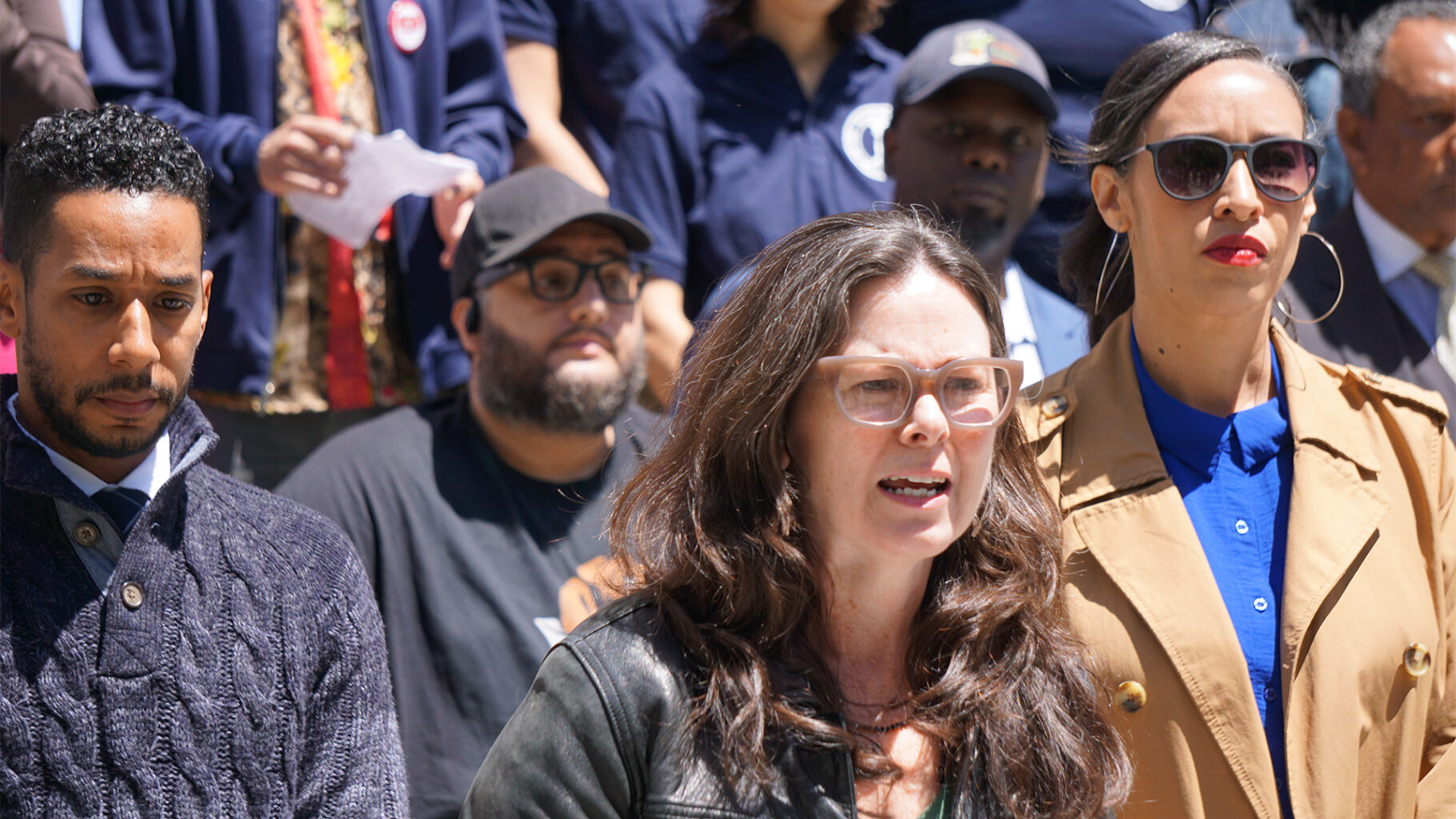
As our CEO Christie Peale emphasized at a recent City Hall rally hosted by Brooklyn Borough President Antonio Reynoso, deed theft is a racial and economic justice crisis — and a direct threat to Black homeownership.
“Every time somebody steals a deed, they steal a home — and that is a stolen future. It’s a resident, it’s a family who’s pushed out and displaced, while equity is stripped from our communities who have been denied the opportunity to build wealth for generations … But we can fight this.”
The Center and our partners work every day to fight back against deed theft. Call the Center at 1-855-HOME-456 or 646-786-0888, or visit our HomeownerHelpNY.org to be connected with free housing counseling or legal assistance. Our statewide network of partners can help with:
Together, we can protect homes and preserve the legacy of Black homeownership.
By: Center for New York City Neighborhoods
Jun 23, 2025
Return To All Posts
Dial 311 and ask for the Center for NYC Neighborhoods
Or call us directly at 646-786-0888
Email: info@cnycn.org
Press: press@cnycn.org